Years before December 1849
The Lost Throne
Before he became the feared captain of [Mompracem](entity:location-recall-location-mompracem-418daf0b6e68), [Sandokan](entity:character-recall-character-sandokan-9165b2a1d81f) lost his throne after European powers conspired to curb his influence. He remembered the murder of his mother, brothers, sisters, and other loved ones as the wound from which his hatred of Europeans grew.
That history gave his raids a personal purpose: he saw them as vengeance for a family and a power taken from him. He swore that he would never abandon that revenge.
Before December 1849
Gifts to the Vulnerable
Alongside his violence, [Sandokan](entity:character-recall-character-sandokan-9165b2a1d81f) had repeatedly helped people who were weaker or in danger. As [Yanez](entity:character-recall-character-yanez-564fd1e6bb41) later recalled, he defended tribes from enemy raids, returned captive women to enemy ports, and rescued shipwreck survivors, sometimes giving them riches as well.
These deeds complicate the reputation of a pirate feared across the region. Yanez regarded Sandokan’s generosity as genuine, even when it risked the safety of Sandokan and his men.
1847
Britain Occupies Labuan
Britain occupied [Labuan](entity:location-recall-location-labuan-ce8ee86e281f) in [1847](entity:time-recall-time-1847-1018ac72bf25), establishing a foothold intended to suppress piracy in the surrounding waters. The island, with a small European population among its mostly Malay inhabitants, became a more dangerous destination for the pirates of [Mompracem](entity:location-recall-location-mompracem-418daf0b6e68).
The British built [Victoria Citadel](entity:location-recall-location-16936fa4af84) and fortified the settlement against further raids. That military presence would soon make [Sandokan](entity:character-recall-character-sandokan-9165b2a1d81f)’s attempt to reach the island a perilous undertaking.
Night of 20 December 1849
The Stormbound Captain
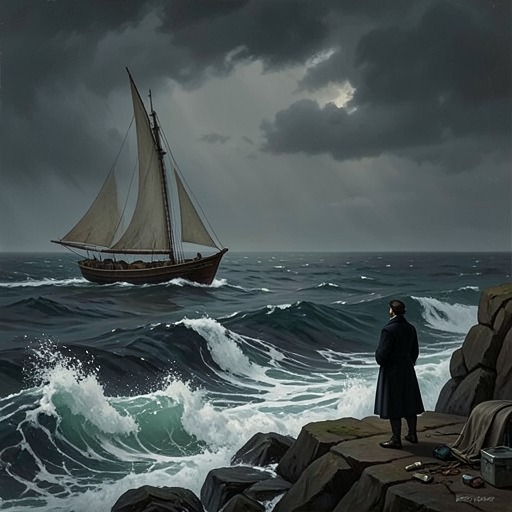
A violent hurricane battered [Mompracem](entity:location-recall-location-mompracem-418daf0b6e68), the pirate stronghold in the [South China Sea](entity:location-recall-location-af64c17d172f). In a richly furnished hut above the sea, [Sandokan](entity:character-recall-character-sandokan-9165b2a1d81f) waited alone, restless and impatient for [Yanez](entity:character-recall-character-yanez-564fd1e6bb41) to return.
The storm magnified the isolation of the island and the captain’s unease. He paced, played the harmonium, and repeatedly watched the dark waters for his friend’s arrival.
Night of 20 December 1849
Yanez Returns
A small ship entered the bay through the storm, and [Sandokan](entity:character-recall-character-sandokan-9165b2a1d81f) recognized the answering whistle as a sign that [Yanez](entity:character-recall-character-yanez-564fd1e6bb41) had come back. The two friends greeted one another warmly before taking shelter in the hut.
Their reunion restored the easy intimacy between the European adventurer and the pirate captain. Sandokan soon turned to the information he had been waiting for, asking about the mysterious golden-haired woman on [Labuan](entity:location-recall-location-labuan-ce8ee86e281f).
Night of 20 December 1849
News of the Pearl
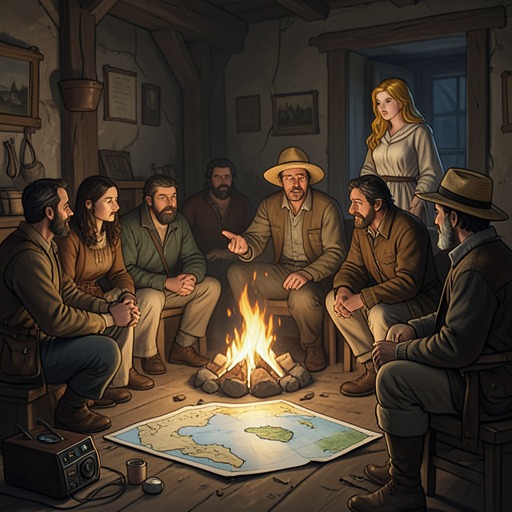
[Yanez](entity:character-recall-character-yanez-564fd1e6bb41) told [Sandokan](entity:character-recall-character-sandokan-9165b2a1d81f) that he had heard of an extraordinarily beautiful young woman on [Labuan](entity:location-recall-location-labuan-ce8ee86e281f), famed for golden hair, blue eyes, and pale skin. Her identity was uncertain: some called her the daughter of a colonel or lord, while others linked her to the island’s governor.
The report seized Sandokan’s imagination. Although he had never seen her, the woman’s beauty and mystery had already begun to draw him toward Labuan.
Night of 20 December 1849
Sandokan’s Vengeance
When the talk turned to the British presence on [Labuan](entity:location-recall-location-labuan-ce8ee86e281f), [Sandokan](entity:character-recall-character-sandokan-9165b2a1d81f) erupted against the European powers he blamed for his family’s destruction. He insisted that their hostility had made his own violence inevitable and vowed that his vengeance would not relent.
[Yanez](entity:character-recall-character-yanez-564fd1e6bb41) acknowledged Sandokan’s generosity toward the vulnerable but did not deny the force of his hatred. Their exchange laid bare the divided nature of Sandokan’s reputation: merciless to his enemies, yet capable of compassion toward others.
Late night, 20 December 1849
The Decision to Go
[Sandokan](entity:character-recall-character-sandokan-9165b2a1d81f) revealed that he intended to go to [Labuan](entity:location-recall-location-labuan-ce8ee86e281f) and see the woman for himself. [Yanez](entity:character-recall-character-yanez-564fd1e6bb41) warned that the island was defended by British forces and that a cruiser was already moving through the surrounding waters.
The warning did not change Sandokan’s mind. He believed an irresistible force was drawing him toward the [Pearl of Labuan](entity:character-recall-character-pearl-of-labuan-0bc2e29948d3), even as Yanez feared that the journey would expose their stronghold to danger.
Morning of 21 December 1849
Preparing the Expedition
A few hours after sunrise, [Sandokan](entity:character-recall-character-sandokan-9165b2a1d81f) dressed for war and went down from his hut to the shore. [Yanez](entity:character-recall-character-yanez-564fd1e6bb41) had prepared two of the fleet’s best vessels and equipped them with additional weapons, though he cautioned Sandokan that he might have prepared the captain’s undoing.
Sandokan promised to be careful and to return as soon as he had seen the young woman. The promise did little to ease Yanez’s misgivings, but the expedition was ready to depart.
Morning of 21 December 1849
The Tigers Assemble
At the bay, hundreds of pirates waited for [Sandokan](entity:character-recall-character-sandokan-9165b2a1d81f)’s orders. He selected crews for two prahus, assigning part of [Patan](entity:character-recall-character-patan-21f77840acf1)’s company to [Giro-Batol](entity:character-recall-character-giro-batol-7bfdd8a3447b) and directing the men to board the vessels.
The assembled pirates answered Sandokan with fierce enthusiasm. Their devotion made clear that his expedition was not merely a private journey: it was a sortie by the leader of [Mompracem](entity:location-recall-location-mompracem-418daf0b6e68) and his followers.
Morning of 21 December 1849
A Junk in Sight
Before [Sandokan](entity:character-recall-character-sandokan-9165b2a1d81f)’s ships left the island, Kili-Dalù brought word that a large junk was sailing near the [Romades](entity:location-recall-location-romades-a9494af9e996). Sandokan decided that the vessel would be captured before he continued toward [Labuan](entity:location-recall-location-labuan-ce8ee86e281f).
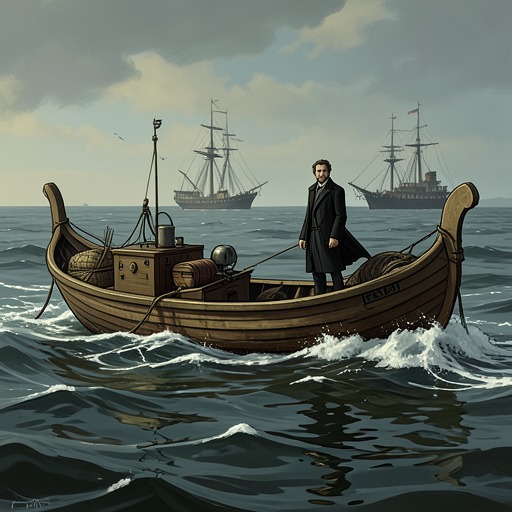
He boarded a small boat to join the two prahus, while [Yanez](entity:character-recall-character-yanez-564fd1e6bb41) remained behind. The change of plan offered the pirates a likely prize but also delayed Sandokan’s passage to the island he had come to reach.
Later on 21 December 1849
The Junk Is Attacked
The pirate ships intercepted the junk, whose crew raised the emblem of [James Brooke](entity:character-recall-character-james-brooke-c4d9d120e269), [Sandokan](entity:character-recall-character-sandokan-9165b2a1d81f)’s enemy. The junk’s cannon fired first, but [Patan](entity:character-recall-character-patan-21f77840acf1)’s shot brought down its mainmast, and the two prahus followed with a sustained assault.
When men tried to escape in a rowboat, Sandokan ordered it fired upon. The attack devastated the junk’s defenses, though a small group of sailors remained aboard and fought on.
During the junk attack, 21 December 1849
Pagkon’s Sacrifice
As [Sandokan](entity:character-recall-character-sandokan-9165b2a1d81f) prepared to leap aboard the junk, Pagkon stepped in front of him and was killed by a rifle shot. His action saved the captain from the shot, and Sandokan acknowledged the sacrifice before charging onto the enemy vessel.
The loss made the boarding personal. Sandokan led his men onto the junk, where they overwhelmed the remaining defenders and forced the survivors to surrender.
After the junk’s surrender, 21 December 1849
The Captain Is Spared
[Sandokan](entity:character-recall-character-sandokan-9165b2a1d81f) praised the Chinese captain and his crew for defending their vessel, then learned that the junk had been bound for [Sarawak](entity:location-recall-location-d9638bd6df64). He sent a defiant message to [James Brooke](entity:character-recall-character-james-brooke-c4d9d120e269), promising that he would one day meet the enemy’s ships in their own bay.
Rather than punish the surviving captain, Sandokan gave him a string of diamonds to compensate for the destroyed vessel. He then revealed that he was the [Tiger of Malaysia](entity:expression-recall-expression-tiger-of-malaysia-0257bd1e2622), leaving the sailors shocked by the identity of the man who had defeated them.
After the junk raid, 21 December 1849
Course for Labuan
With the junk defeated and its surviving crew left with compensation, [Sandokan](entity:character-recall-character-sandokan-9165b2a1d81f) ordered his ships eastward toward [Labuan](entity:location-recall-location-labuan-ce8ee86e281f). The expedition resumed its original purpose, now carrying the cost of the encounter in the form of dead and wounded pirates.
For Sandokan, the island remained the destination that mattered most. His fascination with the woman he had not yet met continued to outweigh the danger of British patrols.
During the voyage toward Labuan
Patan Is Reprimanded
After the junk battle, [Sandokan](entity:character-recall-character-sandokan-9165b2a1d81f) arranged a burial at sea for Pagkon and another fallen pirate. He then summoned [Patan](entity:character-recall-character-patan-21f77840acf1) and rebuked him for failing to follow Sandokan onto the enemy ship, a lapse that had left Pagkon to die in his place.
Instead of executing Patan, Sandokan ordered him to lead the next boarding attack and face the danger himself. He also appointed [Sabau](entity:character-recall-character-sabau-ae78dda0156c) to take command of Patan’s men once Patan was killed, turning the loss into a grim expectation of the next fight.
Early morning, after leaving the Romades
Labuan Appears
The two prahus passed the [Three Islands](entity:location-recall-location-6663d2191877) and, near dawn, [Sandokan](entity:character-recall-character-sandokan-9165b2a1d81f) finally sighted [Labuan](entity:location-recall-location-labuan-ce8ee86e281f). He ordered the ships toward a river, choosing concealment rather than approaching the island openly.
The riverbanks offered cover from patrolling cruisers. The pirates anchored beneath enormous trees, hidden from vessels watching the coast.
Midday, after reaching Labuan
The Forest Is Reconnoitered
Once the ships were concealed, [Sandokan](entity:character-recall-character-sandokan-9165b2a1d81f) sent men to watch the forest and the river mouth. He then went ashore with [Patan](entity:character-recall-character-patan-21f77840acf1) to investigate the island, carrying a carbine as they moved through its dense vegetation.
The search brought them into contact with a liveried servant walking a dog. Sandokan’s interest was not in the hunt the man was conducting, but in finding out where the famed young woman lived.
Midday, during the forest reconnaissance
The Pearl Is Confirmed
The servant recognized [Sandokan](entity:character-recall-character-sandokan-9165b2a1d81f)’s description of the [Pearl of Labuan](entity:character-recall-character-pearl-of-labuan-0bc2e29948d3) and said that she was loved and admired by everyone on the island. He also confirmed that she lived in a large villa roughly two kilometres away.
Sandokan paid the man and ordered him not to return. The encounter gave Sandokan a destination, and he and [Patan](entity:character-recall-character-patan-21f77840acf1) decided to wait until nightfall before approaching the villa.
Late afternoon, during the wait
The Cruiser Blocks the River
A cannon blast from the sea interrupted [Sandokan](entity:character-recall-character-sandokan-9165b2a1d81f) and [Patan](entity:character-recall-character-patan-21f77840acf1)’s preparations. They hurried back to the river and found that a large British cruiser had taken position at its mouth, blocking the pirates’ route back to open water.
Sandokan abandoned the immediate plan to approach the villa. He called his crews to arms and chose to meet the cruiser rather than allow it to trap them without a fight.
Late afternoon, after the cruiser blocks the river
The First Cruiser Battle
The two prahus rowed out to face a much larger and better-armed British warship. Its first cannon fire passed near their masts, while [Patan](entity:character-recall-character-patan-21f77840acf1)’s return shot struck the cruiser’s bridge and broke its flagpole.
The British guns soon inflicted severe losses. [Sandokan](entity:character-recall-character-sandokan-9165b2a1d81f) ordered barricades built from the wreckage aboard the prahus, and his crews continued firing despite the enemy’s superior strength.
During the first cruiser battle
The Mast Falls
As the cruiser’s fire drove the prahus toward destruction, [Sandokan](entity:character-recall-character-sandokan-9165b2a1d81f) loaded a cannon himself and brought down the British ship’s mainmast. The cruiser ceased firing long enough for its crew to attempt a rescue, giving Sandokan a brief opening.
He ordered [Giro-Batol](entity:character-recall-character-giro-batol-7bfdd8a3447b) and the surviving men from Giro-Batol’s damaged vessel aboard his own prahu. The other ship was abandoned, and the combined crew retreated into the river before the British could resume their attack.
Evening of 21 December 1849
Repairs in the River
[Sandokan](entity:character-recall-character-sandokan-9165b2a1d81f)’s prahu had been badly damaged, and many pirates had fallen, including [Patan](entity:character-recall-character-patan-21f77840acf1) and [Giro-Batol](entity:character-recall-character-giro-batol-7bfdd8a3447b). Sandokan placed [Sabau](entity:character-recall-character-sabau-ae78dda0156c) in command of their men and refused to risk another battle while his force and vessel were so weakened.
The survivors worked for hours to mend the ship, raise new masts, and reinforce its defenses. Sandokan planned to slip away under cover of darkness, postponing revenge rather than sending his remaining men into a hopeless fight.
Late night, 21 December 1849
The Night Escape Begins
After confirming that no British launches patrolled the river mouth, [Sandokan](entity:character-recall-character-sandokan-9165b2a1d81f) ordered the repaired prahu toward the open sea. He demanded silence as the ship moved through darkness, keeping close to the wooded shore to hide its outline from the cruiser.
The prahu grounded briefly on a sandbank, then floated free as the tide rose. With a black sail hoisted, it continued toward the bay and the waiting warship.
Near midnight, during the escape
The Wake Gives Them Away
As the prahu neared the cruiser, phosphorescence began to sparkle in its wake. The light made the pirate vessel conspicuous on the dark water, and [Sandokan](entity:character-recall-character-sandokan-9165b2a1d81f) understood that the retreat had become dangerous.
The British ship’s position lights brightened, its engines stirred, and a call to battle stations carried across the sea. Sandokan’s men took up their weapons, no longer able to depend on concealment.
Near midnight, after the pirates are spotted
The Second Engagement
The cruiser opened fire as the pirates tried to escape. [Sandokan](entity:character-recall-character-sandokan-9165b2a1d81f) turned the prahu toward the warship, choosing an attack over a flight that had already been exposed, and ordered his men to prepare for boarding.
The disparity in strength was overwhelming. Cannon and grapeshot battered the small vessel, tore down its masts and defenses, and killed or wounded many of its crew, but the survivors refused to surrender.
Near midnight, during the second engagement
The Boarding Charge
With the prahu sinking and only a handful of men still able to fight, [Sandokan](entity:character-recall-character-sandokan-9165b2a1d81f) maneuvered around the cruiser’s attempt to ram them. The pirate vessel struck the British ship’s side, and grappling hooks caught in its rigging.
Sandokan and the surviving pirates climbed aboard and fought their way across the deck toward the stern. They faced a far larger force, and the British crew gradually surrounded them.
Near midnight, at the end of the second engagement
Sandokan Falls Wounded
A bullet struck [Sandokan](entity:character-recall-character-sandokan-9165b2a1d81f) in the chest as he fought across the cruiser’s deck. His men tried to shield him, but British fire broke their resistance and left him badly wounded.
Still bleeding heavily, Sandokan reached the port bulwark, knocked down a sailor, and plunged into the sea. He disappeared beneath the dark waves, leaving his fate uncertain and ending the battle with the surviving pirates overwhelmed.